
xTract Solutions

Free the data trapped in your most valuable documents.

The information that powers your business is already captured, spread across drawings, dense tables, scans, and contracts. xTract Solutions turns your documents into verified data your dashboards, analysts, and AI can use.

The Cost of Stranded Intelligence

Your decisions are only as reliable as the intelligence behind them.

High-stakes decisions about assets, capital, and investments run on data and dashboards. Yet much of the knowledge those decisions need stays trapped in documents that cannot be searched, compared, or analyzed together.

Competitors have access to the same public data and AI models. Your documents contain intelligence other companies cannot replicate, but only once the data inside them is operationalized.

Sources: Navigating the Solutions Landscape for Managing Documents. Critical Steps to Improve Data Quality for Robust Logistics Network Visibility. Poor Data Literacy and Governance Slow AI.

60%Of executives now use AI to support decisions. Those decisions inherit whatever the data misses.
80%Of enterprise information is unstructured and trapped across multiple systems, leaving it largely inaccessible for integrated analysis — what Gartner terms “dark data.”
$12.9MAverage annual cost of poor data quality, with cascading effects on decision quality, resource allocation, and competitive positioning.
54%Of leaders name data quality and management the single most valuable investment for future AI ROI, outpacing technology or talent.
What xTract Does

Each document becomes data your business can analyze and query.

A process and instrumentation diagram from a scanned engineering package. Every component, line, and title-block field can be identified, then extracted into records your systems can query. Multiply this by every document you hold.
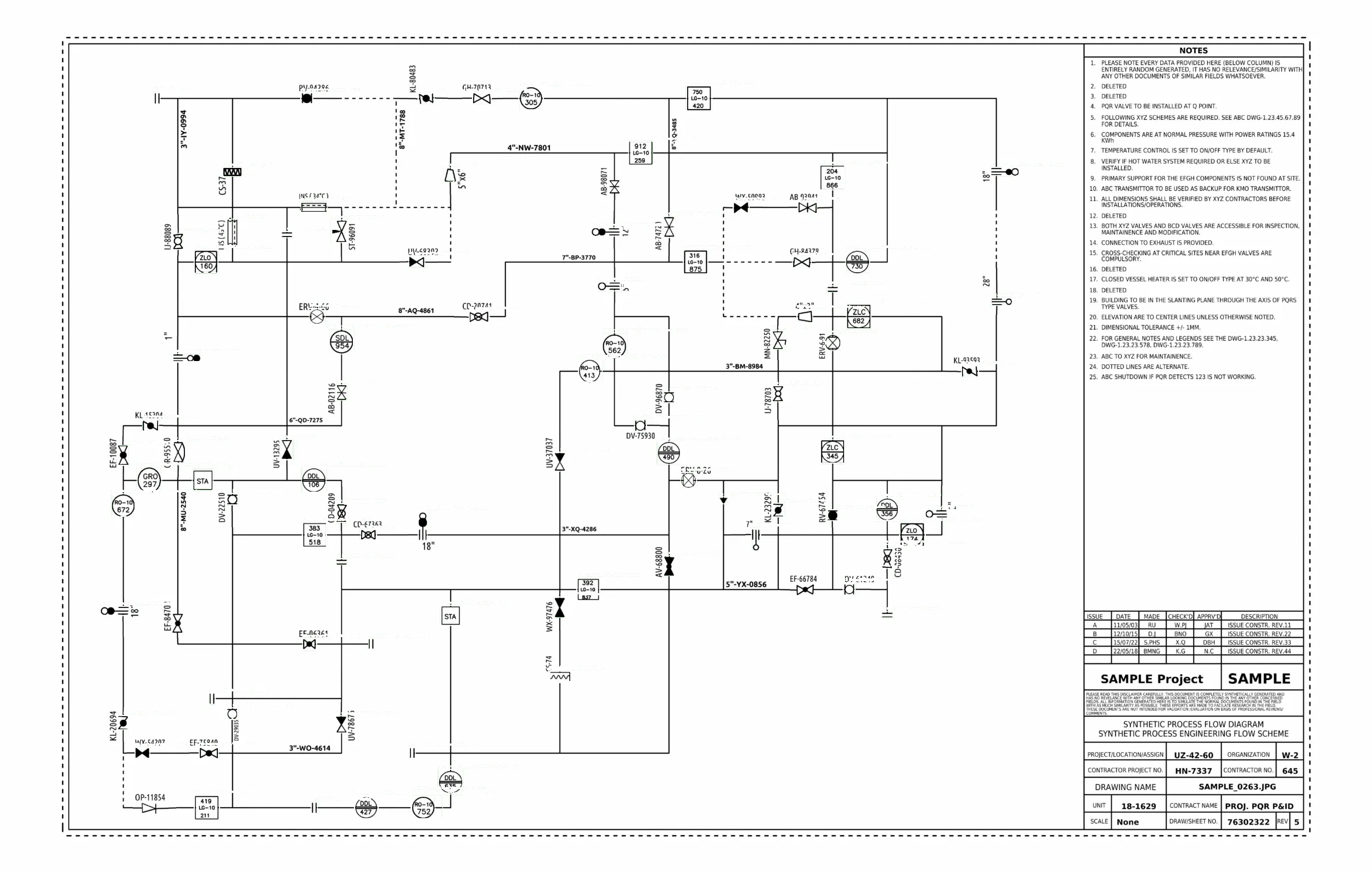
Original DocumentP&ID, Drawing 76302322 Rev 5
Process and instrumentation diagram before extraction
TextTablesDrawingsScansSpreadsheetsFormsImage-based content
Extracted FieldsSchema: Drawing Register v2
Drawing / Sheet NumberVerified76302322, Rev 5Title block
Project / UnitVerifiedUZ-42-60, Unit 18-1629Title block
Line NumbersVerified4"-NW-7801 and 11 moreSheet annotations
Valves and InstrumentsVerifiedAV-68800, UV-68392, and 100 moreSymbol callouts
Latest IssueVerifiedD, Constr. Rev. 44Revision table
Notes and HoldsHuman reviewed25 notes capturedNotes column

Every record carries its source location on the sheet and its review status, so a person can verify any field against the document it came from.

What xTract Enables

Turn millions of complex documents into structured data to power your business.

Extraction runs as a governed pipeline rather than a series of one-off AI runs, with human review where accuracy matters most. Extracted data becomes a product that simultaneously supports a wide variety of high-impact outcomes.

P&ID drawing76302322, Rev 5
Inspection reportIR-2231-18
Vendor data sheetVDS-0118
Master service agreementMSA-2019-044
Mineral leaseLease 04-117

Faster, better decisions

Questions that took weeks of file reading get answered from data in minutes, with the source page attached.

Risk and compliance visibility

Obligations, terms, and specifications become rows you can enumerate, audit, and act on before they surprise you.

BI, dashboards, and forecasting

Document facts flow into the reporting and models your teams already run, instead of sitting outside them.

Grounded AI and search

Assistants and search draw on verified, source-linked data, so answers hold up when someone checks.

Cost avoided

Extraction at machine scale replaces review teams that could never read a million documents, let alone keep up.

Intellectual sovereignty

Decades of proprietary knowledge become intelligence you own outright, not a dataset everyone can license.

Product Demo

See xTract Solutions in action.

How an Engagement Runs

Engineered around your desired outcomes, then delivered into use.

Every engagement starts by defining the information you need and the questions your people need to answer, and ends with verified data in the system where work happens.

Scroll to begin
  1. 01

    Start with the outcome

    Identify the information your business requires and the questions people must answer.

  2. 02

    Design the schema

    With input from your subject matter experts, we define the facts, terms, parameters, and relationships to extract.

  3. 03

    Structure and validate

    We customize an extraction engine and configure human review workflows, tuned to the accuracy and governance the use case demands.

  4. 04

    Deliver into use

    Feed extracted data into one or more systems of record, dashboards, applications, and search and AI tools.

Real-World Outcomes

From structured data to measurable business impact.

See how a strong data foundation can help enterprises scale AI impact to realize efficiency gains, pursue growth and innovation, improve enterprise-level EBIT, and create durable competitive advantage.

Case Study

The AI-Ready Data Foundation Behind a $300B+ Oil & Gas Supermajor

95%
Extraction Accuracy
100M+
Documents
100K/day
Target Processing Scale
10X
Faster Human Review

A $300B+ global oil & gas supermajor selected xMentium from 119 vendors to extract, structure, and govern 100M+ enterprise documents, creating a trusted data foundation for AI, analytics, and high-value operational use cases.

Preparing for a refinery turnaround requires a clear understanding of an asset's operational history, but that history is rarely found in one place. For one global oil and gas company, critical intelligence was distributed across a repository of more than 100 million documents, including P&IDs, work packages, condition assessments, maintenance records, manuals, and inspection reports. Manually reconstructing an integrated view of asset and operational intelligence was difficult, slow, costly, and prone to inconsistencies that could undermine accuracy and confidence in downstream decisions.

By classifying documents and extracting key information including asset and equipment identifiers, dates, and other metadata, the company began turning disconnected records into structured, connected intelligence. The approach achieved 95% extraction accuracy and incorporated human-in-the-loop validation designed to make review workflows up to 10X faster. At production scale, the architecture targets processing 100,000 documents per day.

The result extends well beyond turnaround preparation. The structured, governed knowledge layer is designed to support more than 100 downstream AI and analytics use cases, including operational improvement, EPC buildouts, and field inspection quality. By creating the data foundation once and making it reusable across the enterprise, the company can turn decades of operational history into intelligence that supports both immediate workflows and future AI initiatives.

Case Study

The Conformance Automation Engine Selected by a Global EPC Leader

90–95%
Specification Accuracy
96,000
Engineering Hours Saved Annually
$42.8M
Annual Value Delivered

A global EPC leader selected xMentium from 50 vendors to automate specification matching across complex engineering documents, reducing manual review while improving accuracy and accelerating procurement workflows.

For a global EPC company, RFP conformance review was a labor-intensive process where errors or overlooked requirements could create significant downstream commercial, operational, and project-delivery risk. More than 64,000 vendor responses each year required roughly 96,000 engineer-hours of conformance review. Requirements were buried across technical specifications, while vendor responses appeared in data sheets, diagrams, tables, and text documents. Engineers had to find the relevant information and then accurately match each response to its corresponding requirement, a process that constrained throughput and left room for costly discrepancies that could lead to rework, delays, performance issues, and quality costs.

The company transformed the process by extracting and normalizing requirements from source specifications alongside corresponding information from vendor submissions. The resulting structured data created a repeatable comparison workflow, with supporting evidence and human review allowing engineers to validate requirements and responses side by side rather than building each comparison manually. The result was a process designed to improve speed, reduce cost, increase accuracy, and scale across a much larger volume of vendor submissions.

Using live customer documents, the proof of concept demonstrated 90–95% accuracy extracting information from engineering specifications and vendor drawings. Instead of engineers manually finding and comparing every requirement, the system structures the information first and presents the relevant requirement and vendor response for human validation. This allows engineers to spend more time reviewing potential discrepancies and less time gathering information. The approach is designed to scale to thousands of packages, increasing review capacity while reducing the risk that costly specification mismatches are missed. A bottom-up ROI model estimated $42.8 million in annual value from lower review costs and avoided re-procurement, rework, delays, and quality costs.

Start With a Priority Use Case

Bring your hardest documents. We will show you the data inside.

Send representative documents and the fields you need. We will scope a solution around your decision and show extraction running against your own files.